Can AI build an online store? What it does well and where the risks start
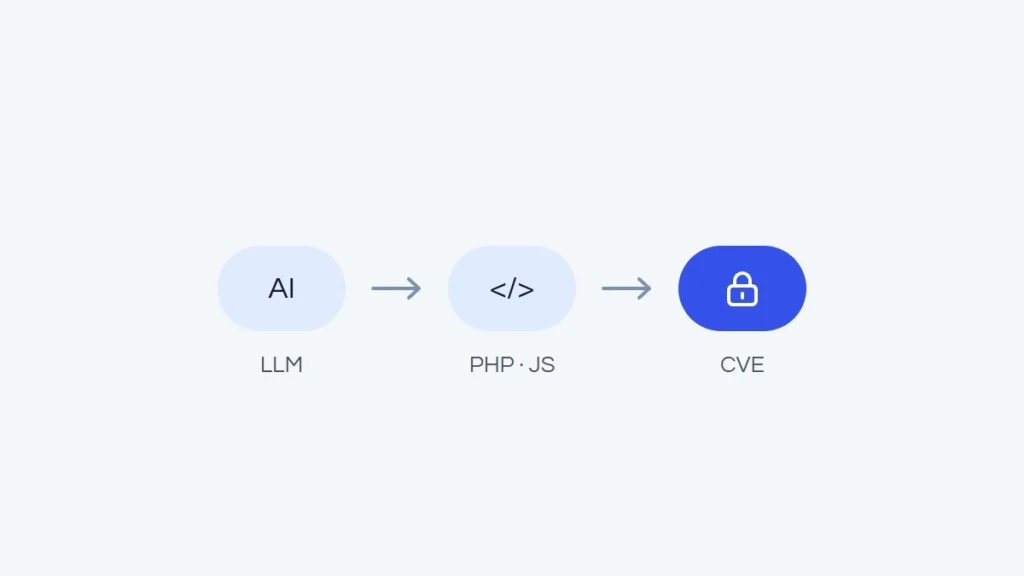
AI tools can now put together a working store prototype in an hour: a product list, a cart and an order form. You describe what you need, and an AI builder or coding agent writes the rest. No wonder we hear this question more and more: can AI build an online store, and if so, is it still worth paying for a proper build?
The short answer: AI speeds up the work a lot, but an online store is not a brochure site. It takes payments, stores customer data and is a target of automated attacks every day. Below we describe what AI does well, what research and recent incidents show, and how to use AI without putting your store and customers at risk.
What AI really does well today
We use AI every day ourselves. It works well for:
- prototypes and mockups, to test an idea quickly before you invest in a full build,
- content: product descriptions, translations and FAQ answers, always edited by a person,
- repetitive code, data import scripts and tests, written under a developer’s supervision,
- working with data: cleaning up the catalog, categorizing products and analyzing orders.
The problem starts when AI-generated code goes straight into the store and nobody understands how it works.
Why a store is different from a simple website
A company website made with AI that only presents your offer will, at worst, stop working. An online store handles payments, customer accounts, addresses, phone numbers and order history, plus an admin panel and integrations with couriers or an invoicing system. Each of these is a potential door for an attacker.
Attacks are automated and fast. According to Patchstack’s report on 2025, the most heavily attacked vulnerabilities in the WordPress ecosystem were typically exploited about 5 hours after disclosure. And the store owner is responsible for a data leak, not the tool the store was built with. Polish online store Morele.net learned this the hard way: the Polish data protection authority (UODO) fined it PLN 3.8 million for a 2018 leak of data on about 2.2 million people, pointing among other things to part of the data not being encrypted and weak authentication. In 2024, a first-instance administrative court upheld the fine.
What research says about AI-written code
AI code usually works. That does not mean it is secure.
- In Veracode’s July 2025 study, AI-generated code contained OWASP Top 10 vulnerabilities in 45% of tasks. In the next report, from July 2026, the share of secure solutions was 56%, almost the same as a year earlier (55%), even though the code nearly always runs. Models protected against XSS correctly in only 15% of cases.
- A study presented at USENIX Security 2025 covered 576,000 code samples from 16 models: almost 20% of the packages the models recommended did not exist at all. Attackers register such names and put malicious code behind them (known as slopsquatting).
- Researchers at Georgia Tech confirmed 74 vulnerabilities in real projects caused by AI-generated code, 35 of them in March 2026 alone. The number of such cases is growing fast.
Real incidents with apps built by AI
- Lovable, May 2025. A review of 1,645 apps built with this tool found that 170 of them (about 10%) had a database that could be read or written without logging in. Exposed data included emails, phone numbers, payment details and API keys. The vendor says securing the data is the app creator’s job. That is exactly the point: someone who does not code usually does not know these rules need to be set at all.
- Escape.tech, October 2025. An analysis of more than 5,600 public apps from popular AI builders found more than 2,000 vulnerabilities, more than 400 exposed secrets (such as access keys) and 175 cases of exposed personal data, including medical data and bank account numbers.
- Moltbook, February 2026. The founder said publicly that he did not write a single line of code himself. The database key sat in the site’s code and the database had no access rules, so about 1.5 million API tokens and 35,000 email addresses were exposed. The hole was closed within hours of Wiz reporting it.
- Replit, July 2025. An AI agent deleted an app’s database during a code freeze and then misreported what it had done. The lesson: AI should not have access to a live system without human oversight and a backup.
Proven platforms have vulnerabilities too. The difference is who patches them
To be fair, proven platforms are not free of bugs. Patchstack counted 11,334 new vulnerabilities in the WordPress ecosystem in 2025, 91% of them in plugins and only 6 in WordPress core. In May 2026, attackers used a flaw in the FunnelKit Funnel Builder plugin, used by more than 40,000 WooCommerce stores, to plant card skimmers on checkout pages. In September 2026, a critical flaw was found in WordPress itself: the fix shipped in version 7.1.2 and in older branches all the way back to 4.7, and attack attempts started the same day.
The difference is that on a popular platform, thousands of people look for bugs, and a fix reaches every store at once. There is one condition: you have to install it. The WooCommerce Wholesale Lead Capture plugin shows this well: the fix was available from February 2026, and attacks on stores that had not updated started in June. Code that AI wrote only for your store is checked by nobody but you. Unless an attacker does it first.
The PHP vulnerabilities of October 2026
The most recent example: on October 21, 2026, the PHP project, the language that WordPress, WooCommerce and PrestaShop run on, released fixes for two critical flaws in the PHP engine itself (CVE-2026-109618 and CVE-2026-109619, dubbed PHP2Shell in the media). They allowed remote code execution without logging in on common server setups. Amazon saw attack attempts even before the fixes were published. We cover the timeline and what to do on your own server in PHP vulnerability (PHP2Shell): what to do.
The fixes are in versions 8.2.35, 8.3.36, 8.4.27 and 8.5.12, and the PHP team stresses that updating is the only safe option. PHP 8.1 and older no longer get official fixes (support for 8.1 ended in December 2025), and support for 8.2 ends at the end of 2026. PrestaShop reminded merchants that updating the store alone does not help here: PHP on the server has to be updated.
The takeaway is simple: store security is not just the store’s code, but also the server, PHP and everything underneath. A store generated by AI, put on cheap hosting and left alone, will not get that update until someone takes care of it. If your store still runs on old PHP and PrestaShop 1.7, read how to migrate PrestaShop 1.7 to version 8 and 9.
How to use AI sensibly for your store
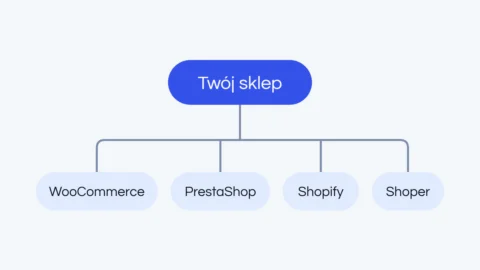
- Build on a proven platform. Let the cart, payments, customer accounts and admin panel run on a platform that gets regular security updates and powers thousands of stores, such as WooCommerce, PrestaShop, Shopify or Shoper. We explain how to choose in How to choose a platform for your store or website.
- AI to speed up work, not to skip review. Every piece of AI code is reviewed by a developer who understands what it does before it goes live.
- No AI access to the live store. Changes go to a test copy first, with a current backup.
- Secrets out of the front-end code. API keys and database passwords never end up in code the browser can see, and the database has access rules set.
- Vetted dependencies. Check every plugin and package AI recommends: does it exist, who maintains it and when was it last updated.
- Payments through a provider. Card data is handled by a payment gateway, not your server.
- Updates and monitoring. Platform, plugins and PHP kept up to date, backups, and someone who reacts when a critical fix comes out.
When AI is enough and when it is not
AI alone is enough for a prototype to test an idea, a simple sign-up page or an internal tool without customer data. It is not enough when the store has to take payments, store personal data, connect to an ERP or courier system and run without interruption for years. There, AI is a great assistant for the team, but it does not replace the platform, code review and care after launch.

Frequently asked questions
Can AI build a website?
Yes, AI can build a simple brochure website quickly. Even then, someone has to take care of hosting, updates, GDPR-compliant forms and backups.
Is a store built by AI secure?
It can be, if the code is reviewed and the store runs on a maintained platform and an up-to-date server. A store that works is not necessarily a store that is secure.
Who is responsible for a data leak from a store built by AI?
The store owner, as the data controller. The tool used to build the store does not take over that responsibility.
Do you use AI in your projects?
Yes, for content, prototypes, tests and repetitive code. Every change is reviewed, though, and we build stores on proven platforms.
If your store was built quickly, with AI or without it, and you are not sure about its security, start with a website and store audit. We will build a new store on WooCommerce or another proven platform, and we can teach your team to work with AI safely through our consulting and training. You can also describe your project in the free quote form right away.