How to choose a platform for your store or website: WooCommerce, PrestaShop, Shopify or Shoper?
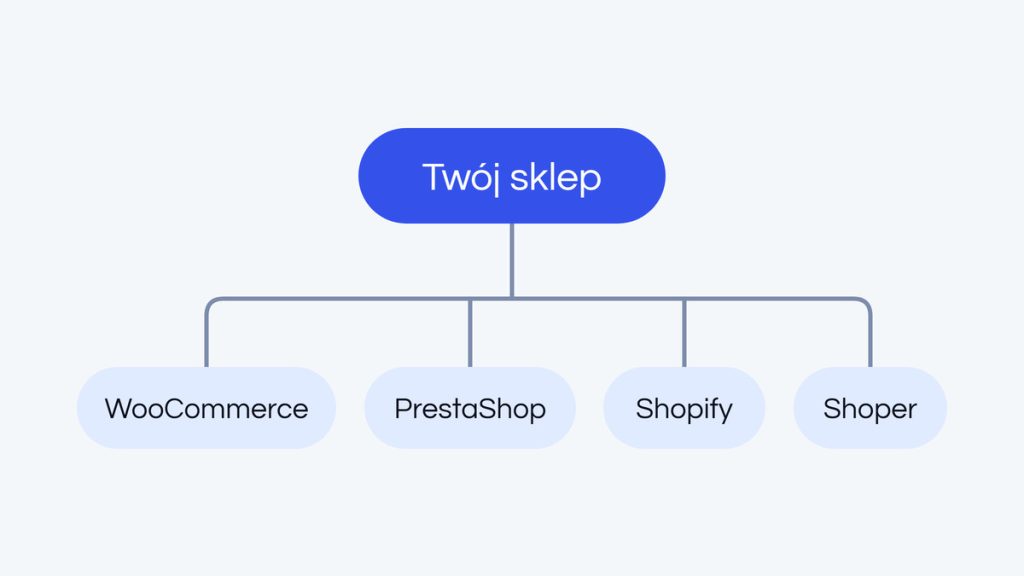
Choosing a platform is one of those decisions that are easiest to make hastily and hardest to undo. At the start they all look similar: you add products, set up payments and start selling. The differences show up only later, when you want something unusual, when traffic grows or when an integration comes along that the system simply doesn’t like. So instead of asking “Which platform is the best?” ask “Which one is the best for me?”
You won’t find a ranking with a single winner in this article, because such a ranking would be dishonest. What you will find is a way of thinking that lets you match the tool to your actual business model, not to a passing trend or the opinion of a friend who “heard that X is the best.”
Start by asking what your business should be in two years
The most common mistake is choosing a platform for what the business looks like today, without considering where it is heading. A store that has fifty products and one sales channel today may have several thousand products in two years, sell on Allegro and Amazon, and need integration with a warehouse management system. If the platform can’t handle that trajectory, a migration awaits you at the worst possible moment: in the middle of growth.
That is why the first question is not “What is cheap and fast?” but “What scale and complexity will I need to handle in a year or two?” The answer eliminates half the options before you even start comparing features.
WooCommerce: flexibility and full control
WooCommerce, the store solution built on WordPress, offers practically unlimited flexibility. It is open source, so you have full control over the code, the data and the direction of development, and a rich plugin ecosystem lets you build almost any sales model. It is the natural choice when you need unusual features or custom integrations, or when you don’t want to depend on a single vendor.
That freedom comes at a price: WooCommerce needs deliberate maintenance. Hosting, updates, security and performance are on you, and poorly chosen plugins can slow the store down. In good hands, it is the most powerful of the popular platforms; left to itself, it can become a headache. It is the choice for those who want to build something of their own and treat the store as part of their strategy, not an off-the-shelf product.
PrestaShop: a store built for selling from the ground up
PrestaShop, on the other hand, is a platform built exclusively for eCommerce, so many sales features are built in where WooCommerce would need plugins. It works well for stores with a large catalog and for B2B models, especially when you need advanced management of prices, customer groups or multiple languages.
In return, it can be more technically demanding when it comes to unusual changes, and its ecosystem is smaller than that of WordPress. It is a solid choice when the store is the heart of the business and you need a dedicated sales tool rather than a general-purpose CMS extended with selling features.
Shopify: convenience in exchange for control
Shopify is a SaaS model, meaning a platform you rent with hosting, security and updates included in the package. Launching is fast and convenient, and many things simply work without your involvement. For someone who wants to sell rather than deal with the technical side of a store, it is a very tempting proposition.
The price of this convenience is less control and monthly fees that grow with add-ons and commissions. Deeper, unusual modifications can be limited by what the platform allows, and your data and processes live in a closed ecosystem. Shopify works great for standard sales models and a quick start; less so when you need something truly out of the ordinary.
Shoper and subscription platforms: simple and local
Shoper and similar Polish subscription platforms are the local equivalent of the Shopify approach, firmly rooted in the Polish market: Polish integrations, couriers, payment systems and support, all in one place. For a small or medium-sized store that wants to launch quickly without technical resources, it is a sensible and predictable choice.
The limitations are the same as with any subscription model: you work within what the platform has anticipated, and with unusual needs you will hit a wall sooner or later. As long as your model fits the standard, it is convenient. The problem starts when you want to step outside the box.
Not just a store: what about a website?
If you don’t sell online, the equation looks different. For a company website, a blog or a content site, WordPress is usually the best choice: it gives you freedom, good SEO support and a simple publishing dashboard. Store platforms are overkill here, and their subscriptions are hard to justify when you are not processing transactions.
It is also worth remembering that the website and the store don’t have to be on the same platform. Sometimes the best setup is a separate, lightweight company website and a separate, dedicated store, tied together by a consistent visual identity.
A decision you don’t want to reverse
Migrating between platforms is possible, but it is one of the more expensive and riskier operations in a store’s life cycle: you move products, orders, customer data and URLs, while making sure you don’t lose your search rankings. That is why it is much cheaper to spend time making the right choice at the start than to fix it under pressure.
Our role in these conversations is simple: we help match the platform to your actual model and plans, even if the answer is “stay with what you have.” We recommend what makes sense for your business, not what happens to be most convenient for us to build.
Not sure which platform can carry your idea? Let’s talk, and we will go through your model and point you in a sensible direction before you spend a single cent on implementation.